
Chief Cobby Rogers
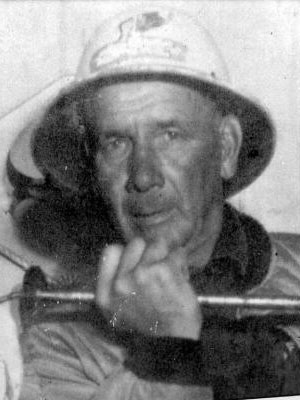
Howard "Cobby" Rogers dedicated 32 years of service to the Harlem-Roscoe Fire Protection District, including 13 years as Fire Chief. A respected community leader, he was a self-employed contractor, carpenter, mason, and owner of a local automobile repair shop. Standing 6 feet, 5 inches tall, Chief Rogers was a familiar and well-respected figure throughout the Roscoe area. In 1965, he also became the first President of the Village of Roscoe.
As Fire Chief, Cobby was a visionary leader who was committed to building a stronger, more capable fire department. He championed aggressive fire prevention efforts, established comprehensive training programs, and worked tirelessly to acquire the equipment necessary to improve the District's emergency response capabilities. Under his leadership, the Illinois Inspection Bureau awarded the District an A-plus insurance rating—the highest possible classification for a department without municipal fire hydrant service at that time.
Chief Rogers often relied on the support of his employees, who regularly assisted with firefighting operations and driving fire apparatus during emergencies. His commitment to the department extended beyond emergency response. In 1959, he oversaw the construction of a major addition to the original Station One and personally completed much of the masonry work.
Tragically, Chief Rogers' life was cut short on December 23, 1965, when he and his wife, Gladys, were killed in a train collision in Rockton. He was 55 years old, and Gladys was 52.
To honor his legacy, the department dedicated a memorial at the original Station One featuring flagpoles and a commemorative plaque. His granddaughter, Jean Rogers-Wedel, fondly recalled, "I was only five, but I got to raise the first flag at my grandpa's memorial!" When Station One was relocated in 1994, the memorial was moved to its current location and later expanded to include memorial bricks recognizing Harlem-Roscoe firefighters who served the department for more than ten years before their passing.
By the time of Chief Rogers' death, the one-station fire district had grown to include six fire apparatus and a rescue boat—a testament to his vision, leadership, and unwavering commitment to protecting the community. His legacy continues to inspire generations of firefighters and serves as a lasting reminder of the dedication upon which the Harlem-Roscoe Fire Protection District was built.